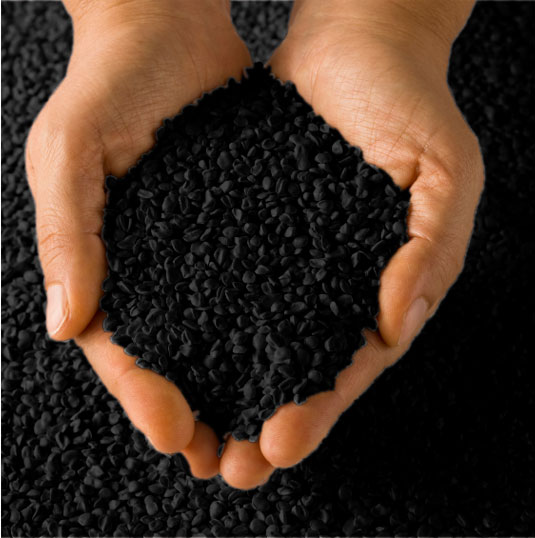
Rubber Granules for Gym Flooring Price — What Buyers Must Know
Description:
Rubber granules are the most preferred raw material for gym flooring because of their unmatched shock absorption, noise reduction, and durability under heavy usage. Whether it is a commercial gym, CrossFit centre, fitness studio, home gym, sports facility or weightlifting arena, high-quality rubber granules ensure safety, comfort and long-term stability. As more developers and gym owners explore flooring options, many search for rubber granules for gym flooring price to plan their flooring budget effectively.
The word “price” does not refer to a single fixed number, because many technical and supply-chain factors influence the final cost. Understanding these factors allows buyers to make informed decisions and choose the right specifications for their gym flooring project. Instead of focusing only on low-cost purchase, smart buyers prioritize granule quality, granule size, purity, bonding strength, and load-bearing performance, since gym flooring must withstand constant high-impact movements, equipment vibration, and free-weight drops.
For most installations, flooring developers use two types of granules:
- SBR rubber granules (tyre-derived) — for base cushioning and impact absorption
- EPDM rubber granules (premium synthetic) — for coloured finishing where required
The selection between SBR and EPDM, or their combination, plays a major role in calculating the gym flooring budget. For example, SBR granules help reduce the total raw material cost because they form the main shock-absorbing layer, while EPDM granules are used only when a premium colour finish is needed. This balanced approach delivers maximum performance without overspending.
Why Rubber Granules Are Ideal for Gym Flooring
Gyms experience constant physical impact — athletes landing on their feet, weights being dropped, treadmills vibrating, machines rocking and dumbbells striking the floor. Ordinary flooring materials crack, loosen or deform under these stresses. Rubber granules offer long-lasting resilience due to their natural elasticity and rebound effect.
- Absorbs impact and protects athletes from injury
- Reduces noise and vibrations between floors
- Supports heavy equipment without sinking or tearing
- High slip resistance for safety during workouts
- Retains flexibility even under temperature variations
- Long lifespan under continuous high-stress usage
These advantages make crumb rubber and EPDM granules the standard material worldwide for gym tiles, fitness mats, rubber rolls and impact-protection flooring.
Factors That Decide the Price of Rubber Granules for Gym Flooring
When buyers search for raw material pricing, they often expect a single catalogue figure. However, gym flooring is a performance-driven installation, and many technical variables influence the total cost. The most important factors include:
- Granule type — SBR for base impact protection; EPDM for premium coloured finish
- Granule size — 1–3 mm or 2–4 mm sizes are widely used for gym flooring
- Purity — low-dust, low-moisture and metal-free granules ensure strong PU bonding
- Quantity — bulk requirements usually reduce per-kg supply cost
- Location — delivery distance affects freight charges
- Flooring design — single-layer or dual-layer structures modify raw material consumption
By understanding these points, gym owners can communicate their project needs more precisely and receive fair quotations from suppliers.
How Much Material Is Required for Gym Flooring?
Raw material consumption is another key element that affects the buyer’s flooring budget — not because of pricing, but because it determines the total quantity of granules needed. The thicker the flooring, the higher the volume of granules required per square foot.
To ensure safety in free-weight and strength-training zones, gym flooring commonly includes:
- Impact-resistant base pad from SBR granules
- Surface bonded layer for durability and slip resistance
Flooring professionals evaluate the type of workouts performed in the gym — such as weightlifting, functional training, or CrossFit — to determine the required flooring thickness and granule composition.
Proper granule selection ensures:
- Secure bonding with PU binder
- Controlled flexibility under heavy loads
- Long working life with minimal maintenance
Recommended Rubber Granule Sizes for Gym Flooring
Different areas of a gym experience different levels of impact. For this reason, flooring specialists select rubber granules according to size and performance requirements. The table below provides a clear guideline:
| Gym Flooring Zone | Recommended Granule Size | Material Type |
|---|---|---|
| Weightlifting & Free-Weights Area | 2–4 mm | SBR Base Granules |
| CrossFit & Functional Training Area | 1–3 mm | SBR Granules + Optional EPDM Finish |
| Cardio & Strength Machine Zone | 1–3 mm | SBR Granules |
| Premium Fitness Studios / Mixed Activity | 1–3 mm (Base) + 0.8–2.5 mm (Top) | SBR Base + EPDM Top |
Gym Flooring Layer Structure Using Rubber Granules
A gym floor is not built of a single material — it is engineered in layers to balance cushioning and durability. The two most common construction styles are:
🔸 Single-Layer Structure
- Made with SBR granules throughout
- Most suitable for indoor gyms with moderate lifting and machine usage
- Delivers high grip, comfort and protection from impact
🔸 Dual-Layer Structure
- Base layer: SBR granules for shock absorption and rebound
- Top layer: EPDM granules for premium colour and abrasion resistance
- Ideal for CrossFit, strength training zones, commercial gyms and premium fitness centres
Many architects and gym contractors prefer a dual-layer system for the best balance between performance and long-term flooring lifespan.
Applications of Rubber Granules in Gym Flooring
| Activity Type | Flooring Requirement | Recommended Material |
|---|---|---|
| Free Weight Drops & Powerlifting | High shock absorption & rebound | 2–4 mm SBR Granules |
| CrossFit & HIIT Training | Slip resistance & flexibility | 1–3 mm SBR Base + EPDM Optional |
| Cardio & Strength Machines | Vibration reduction & stability | 1–3 mm SBR Granules |
| Group Fitness / Zumba / Aerobics | Comfort & joint protection | 1–3 mm SBR Granules |
| Premium Gyms & Branded Fitness Chains | Aesthetic finishing & durability | SBR Base + EPDM Top |
Why Buyers Prefer Rubber Granules for Gym Flooring
The rise of advanced fitness centres in India has created strong demand for flooring that can handle intense daily activity. Rubber granules remain the most reliable choice due to multifunctional performance benefits:
- Highly shock absorbent for athlete safety
- Compatible with PU binders for strong structural bonding
- Crack-resistant and tear-resistant under equipment load
- Excellent grip and slip resistance
- Noise and vibration control
- Long lifespan even under dynamic training environments
These performance advantages make gym developers prioritise proven material quality over low-cost alternatives. Flooring is a long-term investment, and the right granule composition ensures durability for years of continuous training.
Final Buyer Guide — Choosing the Right Rubber Granules for Your Gym Flooring
Although many buyers search for rubber granules for gym flooring price, the most important selection guidelines are not related to cost alone. Gym flooring is a long-term structural component that must perform under extreme daily impact, therefore the priority should always be:
- Right granule size based on workout intensity
- Dust-free and metal-free raw material for safe installation
- Strong PU binder compatibility
- Proper thickness based on activity zones
- Trusted supplier with consistent quality control
When these factors are correct, the flooring performs efficiently, requires minimal maintenance and withstands years of intense fitness activity. Instead of comparing based solely on price, top gym owners and sports flooring contractors focus on long-term durability, safety and performance.
Request Material Guidance & Technical Support
📱 WhatsApp: +91 92207 60400
📧 Email: info@fabrubbers.com
Share your gym size, activity type and flooring requirement — and our technical team will recommend the best granule size, installation thickness and SBR/EPDM material structure to match your project.
FAQs — Rubber Granules for Gym Flooring
Are rubber granules suitable for heavy weightlifting areas?
Yes. 2–4 mm SBR granules are the preferred option for strength zones and free-weight setups due to high shock absorption.
Do gym flooring granules reduce noise and vibration?
Yes. Rubber granules naturally absorb vibration and reduce noise transfer, especially under treadmills, machines and barbells.
Which is better for gym flooring — SBR or EPDM?
SBR is ideal for the shock-absorbing base layer. EPDM is optional for premium colour, UV resistance and abrasion protection on top.
Can rubber granule flooring be used for CrossFit and HIIT training?
Yes. Rubber granules offer excellent slip resistance, cushioning and impact rebound for high-intensity workouts.
How can I get help selecting the right granules for my gym flooring?
Just share your gym area and training type on WhatsApp +91 92207 60400 or info@fabrubbers.com — our team will guide you.
For samples or bulk orders, WhatsApp us at Click Here or email: info@fabrubbers.com
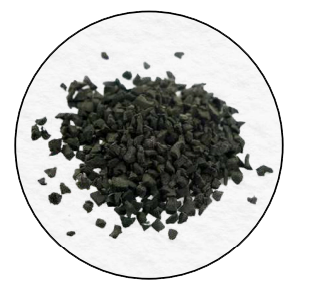
OUR RUBBER GRANULES